

Falling in Love with Your Future Self: Harnessing Imagination, Visualization, and Self-Discovery

In a world constantly evolving with new challenges and opportunities, the idea of “falling in love with your future self” resonates more than ever. As a transformational leader deeply committed to profound change, I believe our greatest power lies not in clinging to the past or being entangled by the chaos of the present, but in our ability to envision and become the best versions of ourselves. According to Dr. Joe Dispenza, “falling in love with your future” can have profound and transformative effects on the brain. Dr. Dispenza, a well-known neuroscientist, author, and lecturer, explores how this process impacts the brain’s structure and function through neuroplasticity and emotional engagement.

Neuroplasticity is the brain’s ability to reorganize itself by forming new neural connections. When you fall in love with your future, you actively engage in visualizing and emotionally investing in your desired outcomes. Emotions play a critical role in how the brain processes information and forms memories. Falling in love with your future involves generating elevated emotional states such as joy, gratitude, and excitement.

By focusing on our inner growth and transformation—nurturing a profound connection with the person we aspire to become, powered by the transformative tools of imagination, visualization, and self-discovery—we ignite the possibility to transcend the upheavals around us. These practices are essential in today’s fast-paced society and workplace, significantly impacting our relationships, happiness, and overall well-being. It is within this personal metamorphosis that we unlock the capacity to reshape our reality and ultimately transform the world—starting with ourselves.  Let’s explore the transformation tools we already possess to create the self-idol image of your greatest future self:

The Power of Imagination

Imagination is often dismissed as a child’s play, but it’s a fundamental skill that adults can harness to sculpt their future. In the realm of personal development, imagination is the gateway to possibility. It allows us to conceive of a future where we have achieved our goals and become the best versions of ourselves.

Why It’s Important Today:

  1. Adaptability: The rapid changes in technology, work environments, and societal norms demand adaptability. Imagination helps us envision new ways of solving problems and embracing change.
  2. Innovation: Whether in the workplace or personal life, creativity fosters innovation. Imagining different scenarios and outcomes encourages us to think outside the box and explore new paths.

Harnessing Visualization

Visualization takes the concepts born from imagination and makes them vivid and concrete. This mental rehearsal of future scenarios can be a powerful tool for achieving goals and fostering personal growth.

Why It’s Important Today:

  1. Goal Achievement: Visualization clarifies our goals, making them feel more tangible and achievable. By regularly picturing ourselves succeeding, we align our actions with our aspirations.
  2. Stress Reduction: In the workplace, visualization can be a tool for stress management. Visualizing a calm and confident self can mitigate anxiety and improve performance in high-pressure situations.

Embarking on Self-Discovery

Self-discovery is the journey of understanding our values, strengths, weaknesses, and passions. It’s about digging deep to uncover who we are and who we want to become.

Why It’s Important Today:

  1. Authentic Living: In a world where external influences are constant, self-discovery helps us remain authentic and true to our core values.
  2. Career Fulfillment: Understanding our strengths and passions leads to more fulfilling career choices and a greater sense of purpose at work.

Integrating These Practices

Daily Rituals:

  • Morning Visualization: Spend a few minutes each morning visualizing your day and long-term goals. Picture yourself overcoming obstacles and achieving success.
  • Imagination Sessions: Allocate time for imaginative thinking. This could be through creative hobbies, daydreaming, or brainstorming sessions for new ideas.
  • Self-Reflection: Regularly reflect on your experiences and feelings. Journaling can be an effective tool for this.

Workplace Integration:

  • Goal-Setting Workshops: Implement workshops that encourage employees to visualize their career goals and create action plans.
  • Creative Breaks: Encourage short breaks where employees engage in creative activities to stimulate imagination and innovation.
  • Personal Development Programs: Offer programs that support self-discovery through assessments, coaching, and skill-building.

The Long-Term Impact

Embracing imagination, visualization, and self-discovery transforms not only our professional and personal lives but also our sense of identity and purpose. By falling in love with your future self, you align your daily actions with your long-term vision, creating a fulfilling and meaningful life.

As we continue to navigate the complexities of modern life, these practices offer a compass to guide us toward our desired future, fostering resilience, creativity, and profound joy. Embrace them today and watch as you not only transform your future and also manifest the highest vision you have of yourself while enriching your present.

***********************************************************

Angel Carlton Anderson is a Transformational Writer, Speaker and Facilitator…helping people evolve through the natural cycle of change so that they transform into a greater version of themselves, live a life of purpose & lead with impact.  

To Learn more and download a FREE ebook, visit:  TransformwithAngel.com
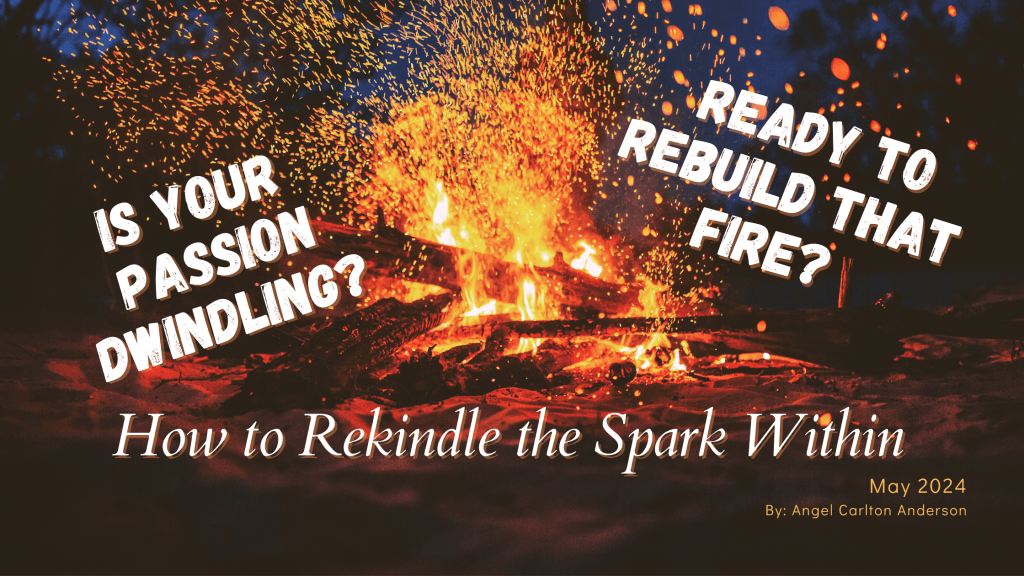
How to Rekindle the Spark Within

Recently, I feel like I have been going through the motions and at the same time, feel a shift in my passion for what I do.  Not exactly a complete loss of passion but definitely a decline to the point where it has caused me to pause and reevaluate everything.  Can anyone relate?  This is a bit of an issue for me since my passion is my business that aims to inspire and motivate people. I make it a point to pay close attention to these alterations and not fight them because I truly believe they are directional signs pointing us in another direction.  So rather than getting frustrated, I asked for help.

On a recent road trip, I bared my soul, opened my frozen heart, shared my deepest concerns, and asked my husband for some honest feedback. Have you ever been totally blindsided by someone’s response in asking for help that it took 2 days just to process the information??  Like I have said before, “truth is absurd when first heard”.  To say the least, I was triggered by his honesty that I obviously wasn’t quite ready to hear.  I had asked for help but instead got an earful on what I am not doing to take things to the next level.  I got a very clear picture on how he sees me “work my passion” through his eyes.  And if I am going to be truthful, I haven’t been treating my “work” with much passion at all. This heavy conversation is what broke the ice exposing an entirely new degree of passion I’ve been missing, giving my purpose an entirely new perspective. 

As part of any transformation process, we need to RELEASE the behaviors that no longer serve us.  But first REALIZE the truth about what needs to change and do something about it, not just sweep it under the rug.  And many times we cannot see the truth when we are stuck in our limiting beliefs about what it’s supposed to look like.  This is when outside perspectives are extremely valuable.  And like I recently learned, we just have to put our ego aside, receive feedback with an open heart, and be coachable. 

I realized finding my passion isn’t so much about where to look for it or even doing something differently.  It was about identifying the blocks and barriers that prevent it from becoming the bonfire it once was or wants to become. I invite you to consider looking at your past experiences that may have caused you to hang on to un-dealt-with emotional baggage like guilt, shame, regret or remorse.  Until you work through and process these emotions properly, your passion can never truly thrive. 

As I prepared to spend the day writing at the beach, I accidentally grabbed my “A Course in Transformation Guidebook”.  Before I set it back down, I thought to myself, “Huh, maybe I need to do my own work to process this passion transformation thing I’m going through.”  So I did.  I spent 4 hours literally going through page-by-page of my own transformation framework that helped me so many times before.  Going through this therapeutic workbook helped me address what needed to be healed. And when I did, I felt an openness and a freedom that was like a burst of oxygen igniting the flame.  I began to feel excitement.  Ideas began flowing through and I could hardly wait to get to working on my next project.  My own Guidebook helped me create a plan and reset my vision.  Not to toot my own horn, but I have to say, it really works!

So when you start to feel your passion dwindle and that awkward imbalance in your life, begin by doing some inner-renovation work.  Start with the blueprint (The Nowhere to Knowing “A Course in Transformation” Guidebook is a great start) then excavate deep down, release those boulders of negative emotions, take an inventory on what’s working and what isn’t.  Come to terms with the fact that just because you’ve been doing the same thing for a period of time doesn’t mean you’re still passionate about it. And life is too short to be doing anything that doesn’t align with our deepest desires.

There comes a time when we have to look at what is causing our passion to fade.  People can feel disconnected from their passion for various reasons:

  1. Burnout: Overexertion or prolonged stress related to pursuing their passion can lead to burnout, causing individuals to feel disconnected or even resentful toward their once-beloved activity.
  1. Pressure and Expectations: External pressure or expectations, whether from society, family, or oneself, can dampen the enjoyment of a passion. When something that once brought joy becomes associated with pressure to perform or meet certain standards, it can lead to disconnection.
  1. Monotony: Engaging in the same activities or routines associated with their passion without variety or new challenges can lead to boredom and disengagement.
  1. Life Changes: Major life events, such as job changes, relationship shifts, or personal crises, can shift priorities and focus away from one’s passion, leading to feelings of disconnection.
  1. Lack of Progress: Feeling stuck or not making progress toward goals within their passion can be demotivating and lead to disconnection.
  1. External Factors: External circumstances such as financial constraints, health issues, or societal changes can limit opportunities to engage with one’s passion, leading to feelings of disconnect.
  1. Loss of Interest: Sometimes, interests naturally evolve over time, and what once was a passion may no longer hold the same appeal. This can lead to a sense of disconnection as individuals struggle to find new sources of fulfillment.

Addressing feelings of disconnection from one’s passion often involves self-reflection to identify the underlying causes and making intentional efforts to rekindle enthusiasm, whether through seeking new challenges, adjusting expectations, or exploring related interests.

Here’s a few ideas to spark that fire in the belly once again…

  1. Solitude. Spend time alone for self-reflection but do not isolate yourself to the point where you become lonely.  People can be exactly what you need right now (see #2).
  2. Ask for feedback.  There are people in your life that have a front row seat at your life.  Ask them what they see and give them permission to provide some honest feedback.
  3. Brace yourself. Prepare yourself for hearing perspectives that may feel wrong, incorrect or untrue.  Then set your ego aside and admit there’s some truth to what is being said. 
  4. Ditch the excuses.  We sometimes get in the habit of making excuses for not doing things.  Yes, even the things we claim to be passionate about. 
  5. Clear the emotional blockages. I firmly believe when we work through the emotional wounds of our past that have caused us to feel guilt, shame, regret or remorse, it blocks our passion energy from flowing.  So talk to a therapist (or purchase my A COURSE IN TRANSFORMATION GUIDEBOOK on AMAZON) to get to the heart of the blockage. 

When it’s all said and done, our passion is the driving force for why we do what we do.  When our passion dwindles, it causes unhappiness, self-dissatisfaction,  impacts our relationships and bleeds into other aspects of our lives.  When left untreated, we soon become bitter and resentful.  This is a serious imbalance that needs to be remedied.  So the next time you feel uninspired, a lack of enthusiasm, or when the zest for life has diminished, take a good hard look in the mirror and work through that unfinished business.  Take the time to make the changes that light that fire in your belly.  Do whatever is necessary to become the next best version of yourself. I promise you’ll be rewarded with a happy, fulfilled life with an inferno of gratification. 

***********************************************************

Angel Carlton Anderson is a Transformational Writer, Speaker and Facilitator…helping people evolve through the natural cycle of change so that they transform into a greater version of themselves, live a life of purpose & lead with impact.  

To Learn more visit:  TransformwithAngel.com